
Key Takeaways
- National roofing companies bring scale, financing options, and a recognizable name. A local licensed contractor brings accountability, local knowledge, and a warranty backed by a company that’s actually here.
- A workmanship warranty is only as good as the company that issued it — so longevity and a real local office matter more than a national logo.
- Massachusetts code and climate reward local experience: 780 CMR ice-and-water requirements, ice dams, and town-by-town permitting are second nature to a roofer who works here every winter.
- What matters most isn’t the size of the company — it’s whether named, experienced crews do the work and who stands behind it afterward.
What are the real tradeoffs between local and national roofers?
National roofing companies and local contractors each bring something to the table. Here’s the honest version, not the sales version:
| National / franchise | Local licensed contractor | |
|---|---|---|
| Brand & scale | Recognizable name, standardized process, often financing options | Smaller, but reputation is local and personal |
| Who does the work | Often local subcontracted crews under the brand | Frequently the company’s own named crews |
| Accountability | Through a regional or national chain of contacts | Direct — the owner’s reputation is in your town |
| Warranty backing | Depends on the company’s presence staying in your area | Backed by a company you can drive to |
| Local code & climate | Varies by crew | Built-in — works under 780 CMR and through New England winters |
The pattern: size isn’t the deciding factor. What decides it is who’s actually on your roof and who’s reachable when you need them.
Why does accountability favor a local contractor?
A roof comes with a workmanship warranty, and that warranty is only as good as the company that issued it. If the company is gone — or has moved on to another market — there’s no one to call when a flashing detail leaks in year four. A local contractor with a real office and a track record in your area has a reputation to protect and is reachable when something needs attention.
The manufacturer warranty on the materials is separate and stays with the manufacturer either way. But for the workmanship side — the part that covers how the roof was installed — longevity and a local presence are the whole game. For how the two warranties differ, our guide to comparing roofing quotes breaks it down.
Compare a local and a national quote
Our Quote Comparison Tool puts both quotes on the same footing — materials, scope, and warranties — so brand recognition doesn’t do the deciding for you.
Open the Quote Comparison Tool
Why does local code and climate knowledge matter?
Massachusetts roofs face conditions a passing crew can underestimate. 780 CMR requires ice-and-water shield at least 24 inches past the interior of the exterior wall — a rule that exists because of ice dams, the ridge of ice that forms at the roof’s edge and drives meltwater back under the shingles. A roofer who works here every winter scopes for ice dams, balanced ventilation, and town-by-town permitting without being prompted. It’s habit, not a checklist item.
That experience also shows up in the small decisions — how the valleys are detailed, where the snow loads, how a North Shore coastal home differs from an inland one. None of it is exotic; it’s just the difference between a crew that knows the region and one that doesn’t.
“Ice dams are the New England test. A roof scoped without them in mind looks fine in October and leaks in February. Working here every winter is the difference — you stop thinking about ice dams as a special case and start scoping for them every time.”
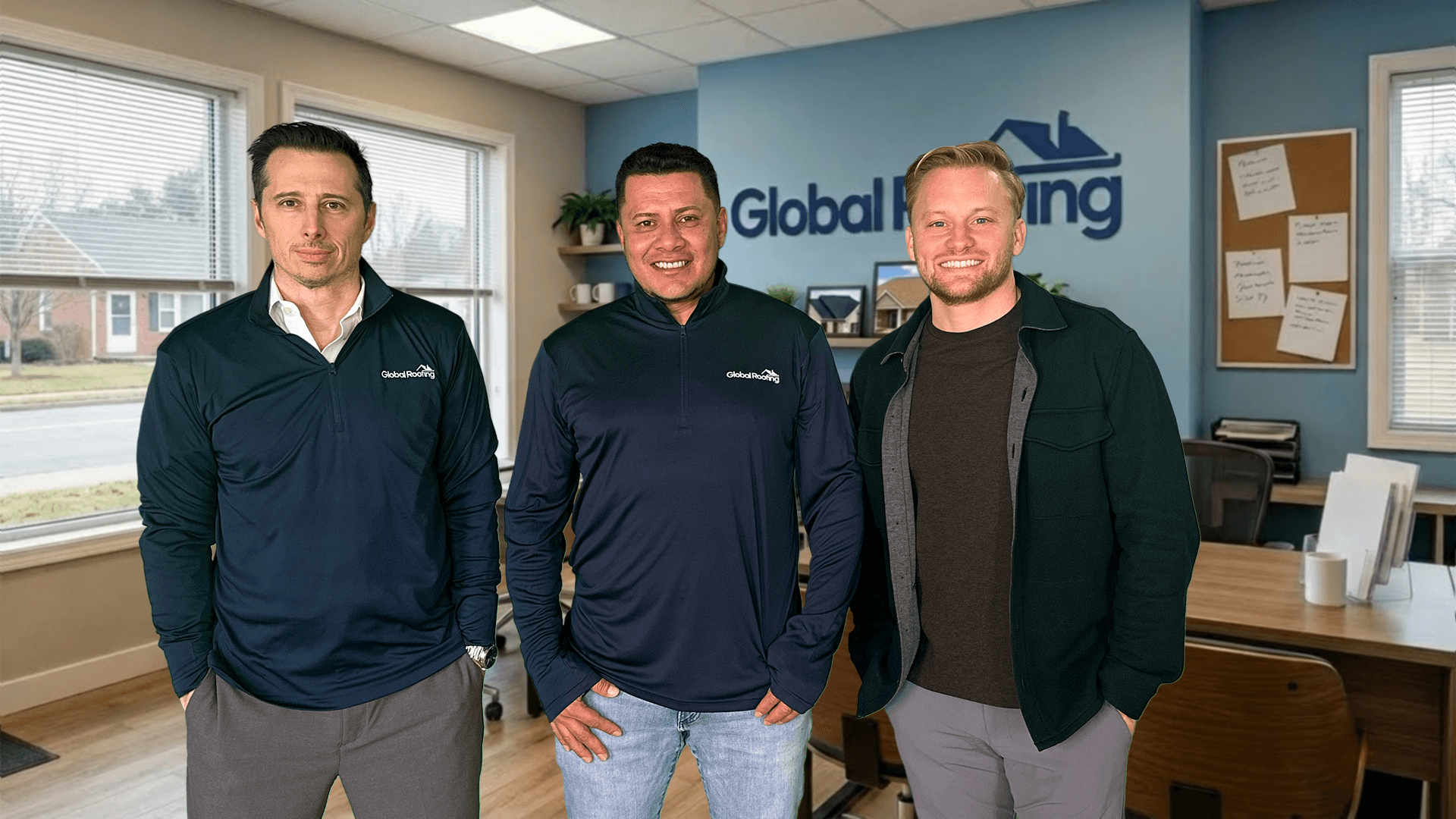
Global Roofing field team — Massachusetts in-home estimates
Named crews versus day labor
The single most useful question cuts across the local-versus-national divide: who is actually going to be on my roof? A recognizable brand on the proposal doesn’t guarantee the brand installs the roof — many national and franchise operations assign the work to local subcontracted crews. That isn’t automatically bad, but it means you should ask the same thing of everyone:
- Do you run your own crews, or subcontract the installation?
- How experienced is the crew that will be on my roof?
- Who carries the workers’ compensation insurance for the installers?
These belong on your list for every contractor. The full set is in what to ask a roofing contractor before hiring.
How should you decide between them?
Don’t decide on the logo. Decide on the same things you’d weigh for any contractor:
- Who does the work — named, experienced crews over rotating subs.
- Who stands behind it — a workmanship warranty from a company that’ll still be reachable in five years.
- Local fluency — comfort with 780 CMR, ice dams, ventilation, and your town’s permitting.
- Value on a matched quote — once both quotes describe the same roof, weigh price against the rest.
Judged that way, a local licensed contractor wins more often than not — not because national companies can’t do good work, but because the things that matter most on a roof tend to live close to home.
Frequently asked questions
Is a local roofer better than a national roofing company?
For most Massachusetts homeowners, a local licensed contractor has real advantages: clearer accountability, a workmanship warranty backed by a company that’ll still be here, hands-on knowledge of 780 CMR and ice dams, and named crews. National companies bring scale and brand recognition, but the work often goes to local subcontractors anyway — so what matters is who’s on your roof and who stands behind it.
Do national roofing companies use subcontractors?
Often, yes. Many national and franchise brands sell the job under a recognizable name and assign installation to local subcontracted crews. It isn’t automatically a problem, but ask any company — national or local — whether they run their own crews and who carries workers’ comp for the installers.
Why does local code knowledge matter for a roof?
Massachusetts has specific requirements an out-of-area crew can miss. 780 CMR requires ice-and-water shield at least 24 inches past the exterior wall because of ice dams. A roofer who works here every winter scopes for ice dams, ventilation, and local permitting by habit; a crew passing through may not.
Will my roofing warranty still be honored if the company closes?
A workmanship warranty is only as good as the company that issued it. That’s the strongest practical argument for a local contractor with a track record and a physical office — they’re reachable and have a local reputation to protect. The manufacturer warranty on the materials stays with the manufacturer regardless.
How we wrote this guide
This article reflects Global Roofing’s experience working as a licensed Massachusetts contractor, checked against Massachusetts State Building Code (780 CMR) ice-and-water shield and ventilation requirements and National Roofing Contractors Association guidance on selecting a contractor. It was reviewed for accuracy by a licensed Massachusetts roofing contractor on our team. See our full editorial process for how we research and update every article.