
Key Takeaways
- Options often exist when your credit isn’t perfect. Financing through Global Roofing’s partners generally starts around a 550 credit score, with a couple of programs around 650.
- A lower score changes three things: fewer programs, a higher cost of borrowing, and more paperwork. It doesn’t automatically mean no.
- Pre-qualifying with a soft inquiry doesn’t affect your score. A full application uses a hard inquiry, which can lower it a little for a while.
- Steady income, lower balances, recent on-time history, and applying once rather than everywhere tend to help. A lender decides; we don’t.
Can you finance siding if your credit isn’t perfect?
The north wall is chalky, a corner cracked in last winter’s wind, and you have a written price in hand. The last time you checked your credit score, it wasn’t the number you were hoping for. So the real question isn’t whether the siding needs doing. It’s whether anyone will lend on it.
Often, yes. A credit score is a lender’s prediction of how likely you are to pay a loan back on time, built from your credit reports. A lower score does two things: it narrows which programs you qualify for, and it usually raises the cost of borrowing, because lenders price for risk. Neither is the same as a no. As a marker, financing through Global Roofing’s partners generally starts around a 550 credit score, with a couple of programs around 650. That’s a starting line, not a promise. The terms you’d be offered depend on the lender and your whole picture. For the full set of ways to pay, see how credit shapes the options in our siding financing guide.
What does a lower score actually change?
Three things, and it helps to name them plainly.
- Which programs are open. Every lender sets its own floor. A lower score means some programs drop off the list while others stay.
- What borrowing costs. Lenders offset risk with a higher interest rate, a shorter term, or a smaller amount. That’s why the full terms of an offer matter more than the word “approved.”
- How much you have to show. Expect a lender to ask for more documentation: pay stubs, bank statements, proof of homeownership.
Some lenders also allow a co-applicant, a second person who signs the loan and shares responsibility for repaying it. It’s one route among several, with real obligations for both people, and a lender can explain how it works for a given program.
| Your situation | What usually changes |
|---|---|
| Score below where most programs start | Fewer programs; a secured option or a co-applicant may be what a lender suggests |
| Score near the partners’ starting range | Options often exist; higher cost of borrowing and more paperwork |
| Lower score but steady income and equity in the home | Income and equity carry weight the score alone doesn’t |
| A recent missed payment on an otherwise clean history | Recency matters; a fresh stretch of on-time months helps |
Which financing paths tend to be more open?
Two paths come up most often when credit is the worry. We’re describing how they work, not steering you toward one.
Contractor financing through a lending partner. You apply through a lender the contractor works with, the lender pays for the work, and you repay in fixed monthly payments. These programs are built around home-improvement projects and tend to have the widest starting range, which is where the 550 figure comes from. Most are unsecured, meaning your home isn’t collateral. This is also where “no money down” and promotional-period offers live, which have their own fine print covered in financing siding with no money down.
Secured options for homeowners with equity. Equity is the share of your home you own outright, the value minus what you still owe. A home equity loan or line of credit is secured by the house, which can make a bank more comfortable when a score isn’t spotless. The tradeoffs are real: it takes longer to close, and the home backs the debt. A personal loan from a bank or credit union is a third path with its own qualifying rules; we compare it with contractor financing in personal loan vs. contractor financing for siding.
A written price first; financing runs alongside
Our free in-person siding assessment puts one clear total in your hands for the actual project. If you want to look at financing, it runs alongside that number, not ahead of it, and it doesn’t hold up scheduling.
Schedule a free assessmentDoes applying for siding financing hurt your credit?
This is the question that keeps some homeowners from asking at all, so here it is plainly. There are two kinds of credit checks.
A soft inquiry is a look at your credit report that doesn’t affect your score. Checking your own report is a soft inquiry. So is pre-qualification, where a lender takes a first look to tell you whether you’re likely to qualify and at roughly what terms. Most of our partners start there, and the Consumer Financial Protection Bureau confirms soft inquiries don’t change your scores.
A hard inquiry happens when you submit a full application and the lender pulls your report to make a decision. It can lower a score a little, because scoring models look at how recently and how often you’ve applied for credit. Per Equifax, a hard inquiry stays on your report for up to two years but typically stops affecting your score after about one. One application is a small, temporary mark. Several applications at several lenders in the same month is what adds up.
What tends to help an application?
None of this is advice for your case. These are the patterns lenders tend to reward, drawn from what the CFPB lists as the inputs to a score.
- Steady, documented income. A lender wants to see the payment fits, not just that the score clears the floor.
- Lower balances on existing credit. The share of available credit you’re using is one of the bigger inputs to a score.
- Recent on-time history. Scores weigh what happened lately. A clean stretch of months counts.
- An amount that fits. A project sized to your budget is easier to approve than a stretch. That starts with a real number, not a guess.
- Applying once, not everywhere. Pre-qualify first, then submit one full application where it fits.
- A clean report. Errors happen. Pulling your own report before you apply is a soft inquiry and costs nothing.
“A lot of homeowners tell us at the door that their credit rules them out, before anyone has looked. Our partners start around a 550 score for most programs. We can’t promise an approval, that’s the lender’s call, but we’d rather you have the real price and the real answer than count yourself out on a guess.”
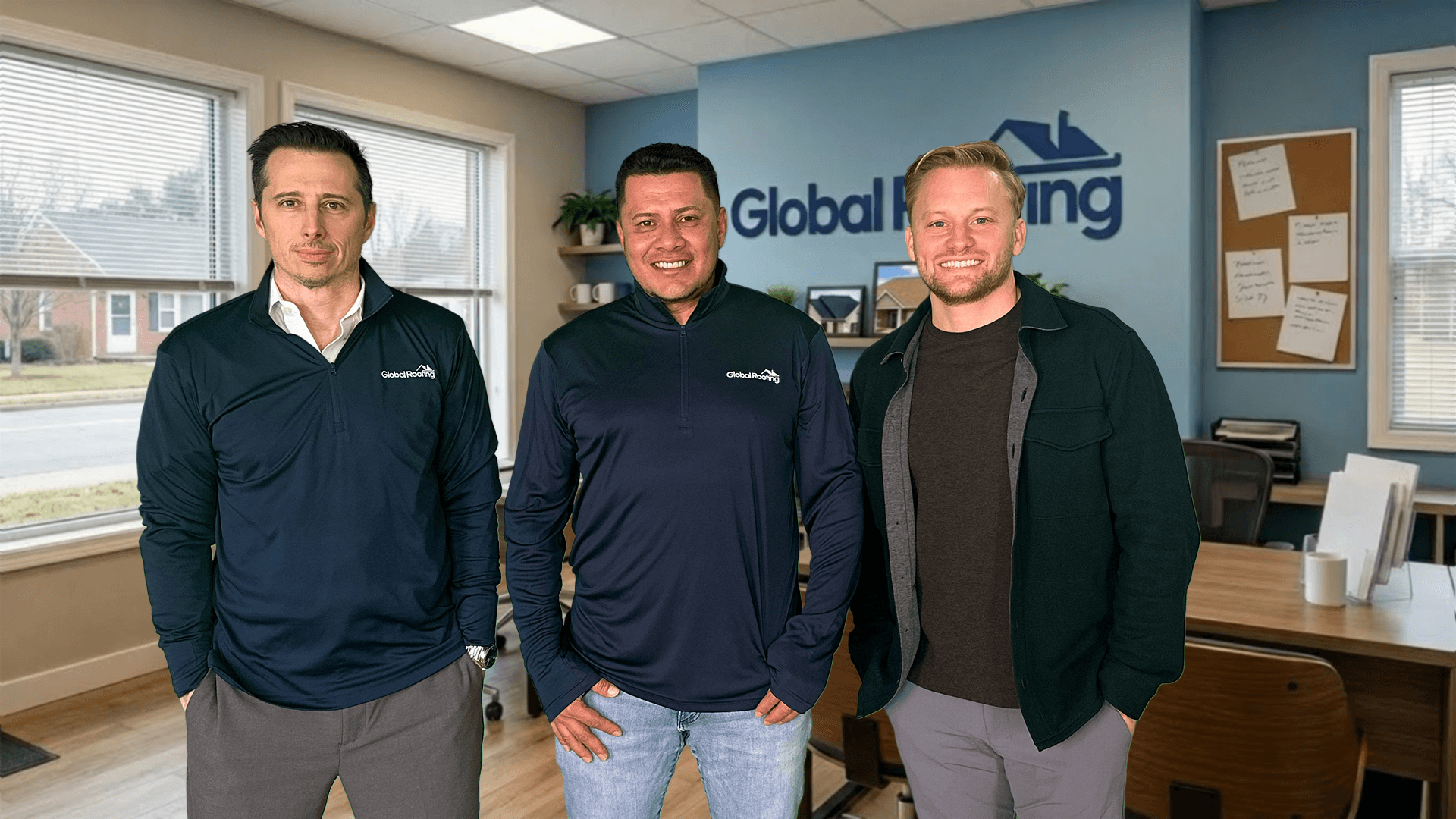
Global Roofing field team — Massachusetts in-home siding assessments
Who actually decides?
A lender does. Global Roofing is a siding contractor. We connect homeowners with financing partners, and that’s the whole of it. We don’t set the floor, read your report, or make the call. What we do is the part a lender can’t: a free in-person assessment and one written total for the real scope, so you and the lender are working from an actual number instead of a range you found online. Our guide walks through what applying through us looks like, step by step. For what your score qualifies for, and which loan makes sense, that’s a conversation with a lender or your bank. If it’s a roof you’re weighing instead, the same question is answered for financing a roof with less-than-perfect credit.
Frequently asked questions
Can you finance siding with bad credit?
Often, yes. A lower score narrows which programs you qualify for and usually raises the cost of borrowing, but it doesn’t automatically rule out financing. Through Global Roofing’s partners, most programs start around a 550 credit score, with a couple around 650. The terms depend on the lender and your full picture, so the only way to know is to apply.
What credit score do you need to finance siding?
There’s no single cutoff; every lender and loan type sets its own line. Through our financing partners, most programs start around 550 and a couple require around 650. Home equity options run by the bank’s own standards. A higher score opens more programs and better terms; a lower score narrows the field without necessarily closing it.
Does applying for siding financing hurt your credit score?
Pre-qualifying usually doesn’t. Most of our partners start with a soft inquiry, which doesn’t affect your score. A full application triggers a hard inquiry, which can lower a score a little for a while. Hard inquiries stay on your report for up to two years but typically stop affecting scores after about a year. Applying once, rather than everywhere, keeps the effect small.
What helps you get approved for siding financing with lower credit?
Steady, documented income, lower balances on existing credit, a recent stretch of on-time payments, and an amount that clearly fits your budget. Applying once instead of at several lenders at the same time helps too. A co-applicant with stronger credit is another route some lenders allow. A lender or your bank can say what matters for your situation.
How we wrote this guide
This article reflects how Global Roofing’s financing partners work with Massachusetts homeowners, checked against Consumer Financial Protection Bureau and Equifax consumer education on credit scores and inquiries. The credit figures cited are our partner programs’ general starting points. This article is explanatory, not financial advice; a lender or your bank can speak to your specific situation. It was reviewed by a licensed Massachusetts contractor on our team. See our full editorial process for how we research and update every article.
Sources
- Consumer Financial Protection Bureau — What is a credit inquiry? (hard vs. soft inquiries and their effect on scores). consumerfinance.gov
- Consumer Financial Protection Bureau — What is a credit score? (what goes into a score and how lenders use it). consumerfinance.gov
- Equifax — Hard Inquiry vs. Soft Inquiry: What’s the Difference? (how long hard inquiries stay on a report). equifax.com
- Global Roofing financing partner program guidelines (general starting credit ranges).