

Key Takeaways
- The decision turns on the roof’s condition, not the calendar or your savings balance.
- A leaking or end-of-life roof rarely pays to put off — water damage compounds into the decking, insulation, and ceilings.
- A sound roof with years of life left is a fair candidate for waiting and saving, which avoids interest entirely.
- An honest inspection is the only reliable way to know which situation you’re in.
The honest answer
Whether to finance now or wait and save isn’t really a money question first — it’s a roof-condition question. A roof that’s actively failing and a roof with a decade of life left call for completely different answers, and the size of your savings account doesn’t change which one you have.
If the roof can safely wait, saving up is the cheapest path because it avoids interest. If it can’t, financing now usually beats waiting, because a failing roof keeps doing damage while you save. So the first move isn’t a budget spreadsheet — it’s an honest look at the roof. The financing side of that, once you’ve decided, lives in our guide to financing a roof replacement.
What waiting can cost
On a sound roof, waiting costs little. On a failing one, it can quietly get expensive:
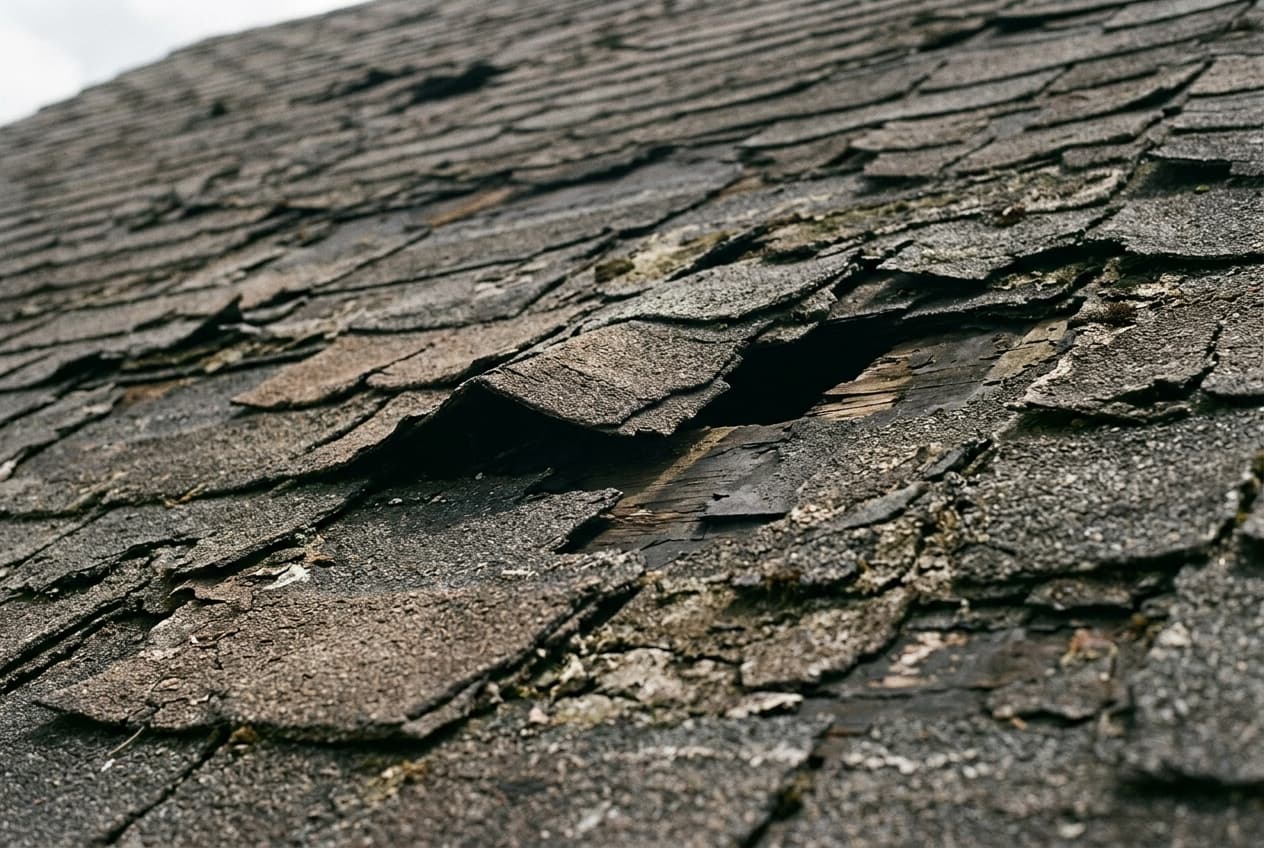
- Damage spreads. A small leak left alone can reach the decking, soak insulation, and stain ceilings — so you end up paying to repair the house on top of replacing the roof. The repair-or-replace math shifts as that happens, which is its own question in whether it’s cheaper to repair or replace.
- Decking rot sets in. Trapped moisture softens the wood base, turning a straightforward replacement into one with extra work underneath.
- Prices have trended up, not down. Roofing materials have generally risen rather than fallen in recent years, so waiting hasn’t reliably meant a cheaper roof later.
The point isn’t to scare anyone into borrowing — it’s that “wait and save” only saves money if the roof is genuinely in shape to wait.
When waiting makes sense
Waiting is the smart, cheaper move when the roof has real life left:
- No active leaks and no widespread wear — the roof is doing its job.
- Years left in its lifespan — a roof only partway through its expected life doesn’t need rushing.
- You can save on a real timeline — putting money aside over months you actually have, not years the roof doesn’t.
In that situation, saving up sidesteps interest altogether — the cheapest version of paying for a roof. Whether borrowing is worth it when you can’t wait is the flip side of this, covered in whether financing a roof costs more than paying cash.
Decide against a real number
Our Roof Cost Calculator gives you a realistic range, so “wait and save” versus “finance now” is a decision about an actual figure, not a guess.
Try the cost calculatorHow to think it through
You don’t have to settle this alone or on a hunch. A sensible order:
- Get an honest inspection. Find out whether the roof can wait — the warning signs are laid out in our guide on whether you need a new roof.
- If it can wait, set a savings timeline and avoid the interest.
- If it can’t, compare financing options and pick a monthly payment that fits — stopping the damage now is usually worth more than the interest.
We’re describing how to weigh it, not making the call for you — the budget side is yours, and a lender can speak to terms. What we can tell you straight is the condition of your roof and what it would take to replace it.
“We never tell someone to borrow. What we tell them is the truth about their roof. If it has years left, save up — no reason to pay interest. If it’s leaking into the decking, every month of waiting is adding to the bill. The roof decides the timing more than the bank account does.”
Global Roofing field team — Massachusetts in-home estimates
Frequently asked questions
Should you finance a roof now or wait and save?
It depends on the roof’s condition. A leaking or end-of-life roof usually costs more to put off, because damage compounds into the decking and interior. A sound roof with years left can wait. An honest assessment of remaining life is the deciding factor.
What does it cost to wait on a roof replacement?
On a failing roof, waiting can turn a contained leak into damaged decking, insulation, and ceilings — repairs on top of the roof itself. Material prices have also trended up rather than down. Waiting only saves money when the roof is genuinely sound enough to wait.
Is it better to pay over time or save up first?
If the roof can safely wait, saving up avoids interest and is cheapest. If it can’t, financing stops the damage now and spreads the cost, and the interest is often less than what a failing roof racks up while you save. Match it to the roof and your budget.
How do I know if my roof can wait?
An honest inspection is the only reliable way. Active leaks, widespread curling or balding shingles, granules in the gutters, attic stains, or a roof near the end of its lifespan all say it shouldn’t wait. No active problems and years of life left make it a candidate for saving up.
How we wrote this guide
This article reflects how Global Roofing advises Massachusetts homeowners weighing timing on a roof, checked against National Roofing Contractors Association guidance on roof condition and service life. It is explanatory and not financial advice — a lender can speak to terms. It was reviewed by a licensed Massachusetts roofing contractor on our team. See our full editorial process for how we research and update every article.